Top Features of Investor Dashboards That Matter
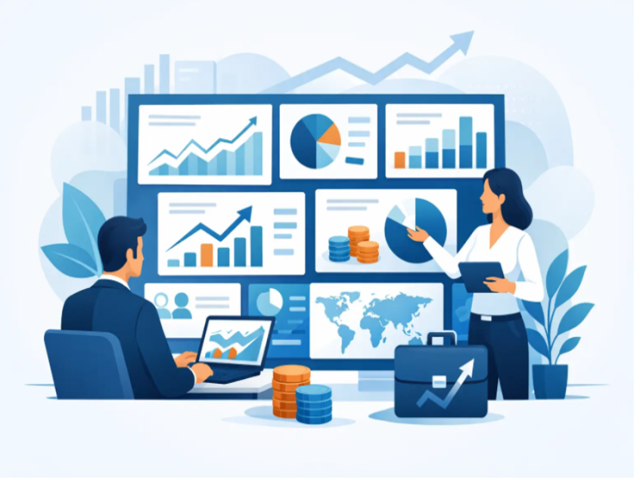
See how the top features of investor dashboards bring portfolio performance, funding, risk, and market activity into one clear view for smarter decisions.
A managed investment account should not feel like a black box. Whether your goal is near-term passive income, a major purchase, or long-term wealth growth, the top features of investor dashboards give you a clear window into where your money stands, how it is allocated, and what actions are available to you.
For investors who do not want to spend their day watching charts or placing trades, visibility is not a substitute for professional management. It is the foundation of trust. A strong dashboard turns complex global market activity into practical information you can understand in minutes.
Top Features of Investor Dashboards for Clearer Control
The best investor dashboards do more than display a large account balance. They organize the details that matter most: your active capital, returns, deposits, withdrawals, investment plan, and portfolio movement over time. The goal is simple - help you stay informed without requiring you to become a full-time trader.
A complete portfolio snapshot
The first screen should answer the question every investor has: What is my account worth right now? A useful dashboard presents total invested capital, current account value, available balance, and profit or loss in a clean, prominent view.
Context matters as much as the number itself. Seeing only a balance may be encouraging, but it does not show whether the account has grown because of new deposits, realized gains, or unrealized market movement. A quality platform separates these figures so you can follow the story behind your portfolio rather than relying on a single headline number.
For investors with more than one program or goal, the dashboard should also show each allocation separately. You may choose a short-term plan for flexibility while maintaining a longer-term allocation intended for sustained growth. Viewing both in one place makes it easier to keep your financial strategy organized.
Performance shown over meaningful time periods
Daily changes can be interesting, but they are rarely enough to judge an investment strategy. Financial markets move. Equities, currencies, crypto assets, indices, and commodities can respond differently to news, liquidity, economic data, and shifts in sentiment.
A capable dashboard lets you view performance over several periods, such as daily, weekly, monthly, year-to-date, and since inception. This broader view helps prevent one volatile session from becoming the entire focus of your decision-making.
Charts should be easy to read, not designed to impress with unnecessary technical detail. A straightforward account-value line, paired with clear date ranges and gain or loss figures, gives most managed investors what they need. More advanced users may appreciate asset-level reporting, but simplicity is often the better choice when your priority is monitoring managed capital efficiently.
Transparent transaction history
Every deposit, withdrawal, transfer, profit distribution, and fee should have a visible record. Transaction history is one of the strongest trust features an investor dashboard can offer because it allows you to verify account activity on your own schedule.
Look for entries that include the date, amount, transaction type, status, and reference information. Pending transactions should be clearly marked rather than appearing as completed. If a withdrawal is being reviewed or processed, the dashboard should communicate that status directly.
This detail is especially valuable for investors who use recurring deposits or build their position over time. Instead of searching through emails or saving separate records, you can review the movement of capital in one secure location. For business owners and entity investors, clean reporting can also make internal bookkeeping more manageable.
Deposit and withdrawal tools that reduce friction
An investor dashboard should make funding your account and accessing eligible funds simple. The most useful systems show available payment methods, minimum requirements, expected processing stages, and transaction status without forcing users through a confusing workflow.
Crypto funding can be particularly helpful for investors who prefer digital assets, but clarity is essential. Wallet addresses, network selections, confirmation requirements, and funding instructions must be displayed carefully. Sending assets on the wrong network can create costly delays, so the interface should prioritize accuracy over speed alone.
Withdrawal controls deserve the same attention. Investors should be able to submit a request, review the details before confirming, and monitor progress afterward. Automatic funding and withdrawal options can save time, but they should never remove the investor's ability to see what is happening with their account.
Allocation and market exposure at a glance
Managed investing is not about personally selecting every position. Still, knowing the broad areas where your capital may be exposed can help you understand your overall strategy. An effective dashboard may show allocation across major market categories such as equities, foreign currencies, cryptocurrencies, indices, and commodities.
This feature is not only for experienced investors. It gives beginners a simpler way to see diversification in action. If every dollar is tied to one type of market, a dashboard should make that concentration visible. If capital is distributed across several market areas, the investor can better understand how different conditions may affect results.
There is a trade-off here. Too much asset-level detail can overwhelm users who came to a managed service precisely because they do not want to manage daily trading decisions. The right dashboard presents high-level exposure clearly, while offering deeper detail only for investors who want it.
Investment plan details and expected timelines
Different financial goals need different time horizons. A dashboard should clearly identify the plan or program attached to each allocation, its start date, its term if applicable, and any rules related to earnings, early access, or withdrawals.
This feature protects both clarity and discipline. When investors can see the intended time frame of their capital, they are less likely to make decisions based only on short-term market noise. A short-term allocation may support a specific cash-flow goal, while a long-term allocation may be designed to remain invested through changing market conditions.
Expected returns, where presented, should be understood as projections or plan terms rather than guarantees. Markets involve risk, and past results do not ensure future performance. Transparency means showing opportunity alongside the conditions and uncertainties that come with investing.
Alerts that keep you informed without creating stress
A dashboard should not demand constant attention, but it should tell you when action or awareness is needed. Well-designed notifications can confirm deposits, withdrawals, account updates, security changes, and important market or plan notices.
The best alerts are specific and controllable. Investors should be able to choose how they receive them and avoid being flooded with minor price movements that do not affect their strategy. Notifications are most valuable when they provide reassurance: your request was received, your deposit was credited, or an important account detail needs review.
Security controls that support confidence
Financial visibility is only useful when account access is protected. Strong dashboards make security features easy to find, including password management, two-factor authentication, login activity, device recognition, and withdrawal verification.
These controls should feel practical, not burdensome. Two-factor authentication may add a few seconds to sign-in, but it can materially reduce the risk of unauthorized access. Investors should also be able to update contact information, review security activity, and report suspicious behavior quickly.
For any online investment platform, security is a shared responsibility. The platform must build thoughtful protections, while users should use unique passwords, secure their email accounts, and avoid sharing login credentials with anyone.
Why Dashboard Quality Changes the Investor Experience
A dashboard cannot remove market risk or promise a particular outcome. What it can do is replace uncertainty about your account with accessible, timely information. That distinction matters when you are trusting a managed strategy to work across active global markets.
Budrigantrade investors benefit most when portfolio visibility is paired with a disciplined approach to their goals. Check your dashboard regularly enough to understand performance and account activity, but do not let every market movement pull you away from a strategy built around your chosen time horizon.
The right investor dashboard makes sophisticated market participation feel more accessible, not more confusing. It gives you the confidence to see your capital clearly, make informed funding decisions, and stay connected to your financial progress while experienced market monitoring and execution handle the day-to-day work.
Recent Posts
-
When Should Portfolios Rebalance for Growth?
08 Oct 2026
-
Platform Security Review for Confident Investors
08 Oct 2026
-

How to Invest Business Cash Reserves Wisely
08 Oct 2026
-
How to Calculate Compound Returns on Investments
08 Oct 2026
-
Alternative Assets Trends Reshaping Portfolios
08 Oct 2026
-
How to Read Portfolio Drawdowns With Confidence
06 Oct 2026
-
-
Are Investment Platforms Regulated in the US?
06 Oct 2026
-

How to Diversify Income Streams With Purpose
06 Oct 2026
-
Crypto Custody Service Review for Investors
06 Oct 2026
-

A Small Business Cash Reserve Example That Works
23 Sep 2026
-

Retirement Planning That Builds Real Flexibility
23 Sep 2026
-
Stocks Versus Bonds Allocation for Your Goals
23 Sep 2026
-

15 Best Investor Due Diligence Questions
23 Sep 2026
-

15 Best Investor Due Diligence Questions
23 Sep 2026