9 Best Financial Forecasting Tools for Investors
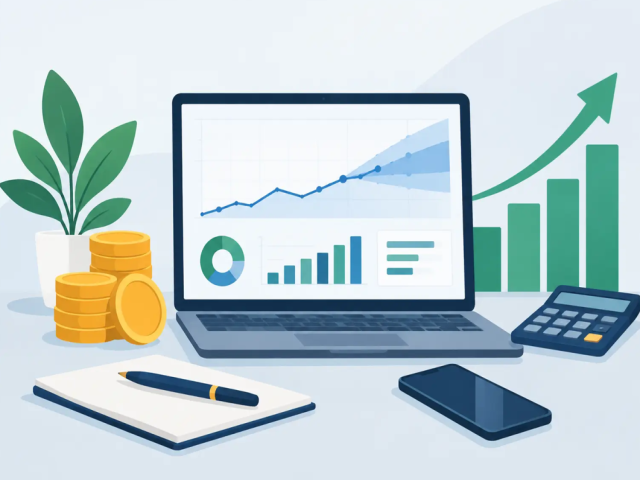
Compare the best financial forecasting tools for clearer cash-flow plans, market scenarios, and investment decisions built around your financial goals.
A forecast is not a promise of profit. It is a practical way to see what could happen before you commit capital, whether you are building a personal investment plan, managing business cash flow, or seeking passive income across global markets. The best financial forecasting tools turn scattered balances, market data, and assumptions into a clearer picture of your next move.
For investors, that clarity matters. A strong tool can show how a market decline may affect a portfolio, whether projected cash flow supports a planned withdrawal, and how different assets may behave under changing conditions. The goal is not to predict every price movement. It is to make better decisions with visible assumptions, realistic scenarios, and a plan that fits your financial well-being.
What makes a forecasting tool worth using?
The right platform depends on what you need to forecast. A working professional building long-term wealth needs a different setup from a small business owner planning payroll, or an investor allocating funds across equities, crypto, currencies, commodities, and indices.
The most useful tools do three things well. They organize current financial data, let you test assumptions, and present results in a way that is easy to act on. A polished dashboard is helpful, but it should not come before accurate inputs and transparent calculations.
Look for features such as scenario planning, automated data imports, cash-flow projections, performance tracking, and the ability to adjust time horizons. Security and reporting also deserve attention, especially when a tool connects to financial accounts or supports entity-level planning.
The 9 best financial forecasting tools for different goals
No single product is the best choice for every investor. These tools stand out because they serve distinct forecasting needs, from simple personal projections to advanced planning for growing companies.
1. Microsoft Excel
Excel remains one of the most flexible forecasting tools available. It is a strong choice for investors who want full control over their assumptions, including contribution schedules, expected returns, inflation, taxes, and withdrawal plans.
Its limitation is time. Building a reliable model requires comfort with formulas and regular updates. Still, for someone willing to learn the basics, Excel can create a highly personalized forecast without forcing you into a rigid template.
2. Google Sheets
Google Sheets offers much of the same flexibility as Excel, with easier sharing and collaboration. It works especially well for couples, business partners, and small teams that want to review projections together.
Use it for simple portfolio tracking, income and expense forecasts, or comparing short-, mid-, and long-term investment goals. It is not designed to replace professional planning software, but it is accessible and practical for people who want visibility without complexity.
3. QuickBooks
QuickBooks is built primarily for business finance, making it useful for entrepreneurs and legal entities that need to forecast operating cash flow alongside investment plans. Its financial reports can help reveal whether a business has excess capital available for growth, reserves, or a diversified investment strategy.
The trade-off is that QuickBooks is not a market analysis platform. It helps forecast the money moving through a business, not the future performance of stocks, crypto, or commodities. For entity investors, that distinction is valuable.
4. Float
Float focuses on cash-flow forecasting and is well suited to business owners who need to know what their bank position may look like weeks or months ahead. It can make income timing, recurring expenses, and upcoming obligations easier to see.
This is a useful tool when liquidity is the priority. Before setting aside capital for a longer-term investment program, a business should understand the cash it needs to keep operations stable. Forecasting available cash can prevent an investment decision from creating unnecessary pressure later.
5. Jirav
Jirav is designed for financial planning and analysis, with budgeting, reporting, and scenario modeling features. It fits companies that have outgrown spreadsheets but do not need the scale of a large enterprise planning system.
For small and midsize businesses, Jirav can support more disciplined decisions around expansion, hiring, reserves, and deployable capital. Its strength is turning operational information into forward-looking financial views that leadership teams can discuss with confidence.
6. Planful
Planful is a more advanced planning platform for organizations that need budgeting, forecasting, consolidation, and structured reporting. It is best suited to finance teams that manage multiple departments, entities, or reporting requirements.
It may be more than an individual investor needs, but it can be a strong fit for established companies that want a clearer view of future cash generation. The value comes from consistency: teams work from shared numbers instead of competing spreadsheet versions.
7. Anaplan
Anaplan supports complex, connected planning across finance and operations. It is generally used by larger organizations with many variables, such as sales forecasts, workforce plans, supply chain costs, and regional performance.
For the right organization, that detail can be powerful. For a solo investor or small business, it can be excessive in both cost and setup effort. Choose Anaplan when planning decisions involve many people and changing assumptions need to flow through the entire model quickly.
8. TradingView
TradingView is useful for investors who want to forecast market possibilities through price charts, technical indicators, alerts, and watchlists. It can help users observe trends in equities, cryptocurrencies, currencies, commodities, and indices from one visual workspace.
Technical analysis should not be treated as certainty. It is a way to identify price levels, momentum, and possible market scenarios. When combined with sound position sizing and a broader financial plan, it can help investors make more disciplined entries and exits.
9. Portfolio Visualizer
Portfolio Visualizer is designed for portfolio analysis and modeling. It can help investors test asset allocations, examine historical behavior, and compare the impact of rebalancing or different contribution patterns.
Historical results do not guarantee future returns, yet they can reveal useful patterns in risk and diversification. This makes the platform particularly valuable for investors who want to understand how a portfolio may respond to different market environments before putting more capital to work.
How to choose among the best financial forecasting tools
Start with the decision you need to make. If your question is, “Can I invest this amount without affecting my monthly obligations?” a cash-flow platform or spreadsheet is likely the right answer. If you are comparing portfolio allocations, a portfolio modeling tool may be more useful. If you actively follow markets, charting software can add another layer of insight.
Then consider how much manual work you will realistically maintain. A detailed spreadsheet is only valuable if you update it. An automated platform may cost more, but it can reduce errors and keep your financial view current. Convenience has real value when your schedule is full and your investment strategy is designed to be passive.
It is also wise to separate forecasting from execution. A forecasting tool helps you plan. It does not manage risk for you, guarantee an outcome, or replace due diligence. Before acting on any projection, review the assumptions behind it: expected return, inflation, fees, taxes, liquidity needs, and downside risk.
Use forecasts to build a stronger investment routine
A useful forecast begins with a clear time horizon. Short-term funds may be needed for emergencies, expenses, or a major purchase. Mid-term capital may support a business goal or planned lifestyle change. Long-term capital can often tolerate more market movement, but it still needs thoughtful diversification and regular review.
Create at least three scenarios: conservative, expected, and stressed. In the conservative view, assume slower growth, delayed income, or weaker markets. In the stressed view, test what happens if expenses rise or an asset class declines sharply. If your plan only works under perfect conditions, it is not yet a dependable plan.
Investors who prefer managed market exposure can use these forecasts to set expectations before allocating funds. At Budrigantrade, portfolio visibility and global market participation are designed to make the investment experience easier to follow, but every investor should still understand the timeline, liquidity terms, and level of risk that fits their goals.
The best forecasting tool is the one that helps you act with more discipline, not more anxiety. Choose a system you can understand, keep your assumptions honest, and let your forecast serve your plan rather than dictate it.
Recent Posts
-

-

Digital Wealth Management Trends to Watch
01 Nov 2026
-

Is Crypto Transaction Security Important?
01 Nov 2026
-

Actively Managed Versus Robo Advisors Compared
01 Nov 2026
-

-

Liquidity Planning for Investors That Works
26 Oct 2026
-

Can Entities Invest? A Practical Path to Growth
26 Oct 2026
-

-

High Yield Savings Versus Investing: Which Fits?
26 Oct 2026
-

Guide to Economic Indicators for Investors
22 Oct 2026
-

Retirement Portfolio Diversification Example
22 Oct 2026
-

When Portfolios Rebalance and Why It Matters
22 Oct 2026
-
How to Rebalance a Multi Asset Portfolio
22 Oct 2026
-

How to Protect Investment Accounts From Fraud
22 Oct 2026
-

What Is Investment Liquidity and Why It Matters
20 Oct 2026