What Causes Investment Losses? 7 Key Reasons
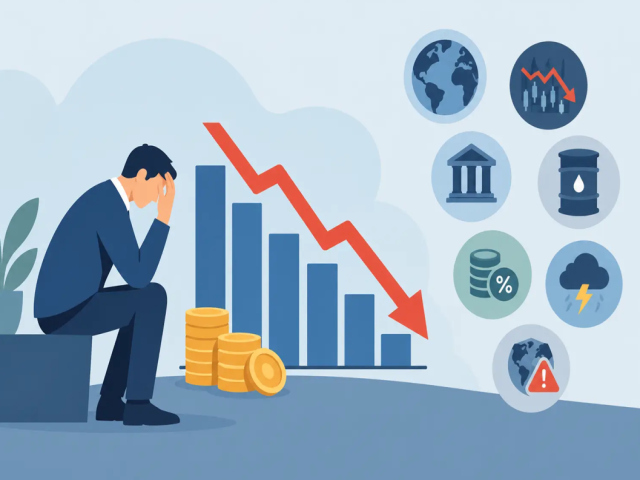
What causes investment losses? See how market volatility, poor timing, concentration, fees, and emotion affect returns - and how to manage risk wisely.
A portfolio can look healthy for months, then lose value in a week because of one unexpected market move. That reality is why investors need to understand what causes investment losses before choosing a strategy, funding an account, or setting income expectations. Losses are not always the result of a bad decision. Often, they are the price of participating in markets where returns and risk move together.
For investors seeking passive income, the goal is not to eliminate every decline. No legitimate approach can promise that. The goal is to recognize the risks you are taking, align them with your timeline, and avoid preventable mistakes that can turn a temporary setback into a lasting loss.
What Causes Investment Losses in Real Markets?
Investment losses happen when the value of an asset falls below its purchase price, when an investment produces less income than expected, or when costs consume too much of the return. The immediate trigger may be a falling stock price, a weaker currency, a crypto selloff, or a commodity shock. Behind that movement, though, there is usually a combination of economic conditions, investor behavior, and portfolio decisions.
Market participation offers opportunity because prices change. The same movement that creates a potential gain can create a loss. A well-designed investment plan does not ignore this fact. It builds around it with diversification, sensible time horizons, ongoing monitoring, and clear rules for managing capital.
1. Broad Market Volatility
Markets react quickly to inflation reports, interest-rate decisions, employment data, geopolitical conflict, earnings announcements, and changes in consumer demand. When uncertainty rises, even strong assets can decline as investors reduce risk or move into cash.
This is especially visible in equities and cryptocurrencies, where sentiment can shift sharply. A short-term decline does not automatically mean an investment has failed. It may simply reflect volatility. The challenge is that investors who need money immediately may be forced to sell during a downturn, turning an unrealized decline into a realized loss.
Time horizon matters here. Capital intended for a near-term purchase, operating expense, or emergency reserve should not carry the same market exposure as capital set aside for longer-term wealth growth.
2. Concentration in One Asset, Sector, or Market
A portfolio can suffer outsized damage when too much capital depends on one company, industry, country, or asset class. An investor who owns only technology stocks may be exposed when growth valuations fall. Someone holding only crypto may face a severe drawdown during a risk-off cycle. A business with most of its reserve funds tied to one currency may feel the impact of exchange-rate changes.
Concentration can produce impressive gains when one position performs well. That is the trade-off. But it can also make results unstable and difficult to recover from when conditions turn.
Diversification does not guarantee a profit or prevent all losses. During major market stress, many assets can fall together. Still, spreading exposure across equities, currencies, indices, commodities, and other suitable holdings can reduce reliance on a single outcome. For investors using a managed strategy, it is worth understanding not only the expected return but also where the underlying risk is concentrated.
3. Poor Timing and Short-Term Pressure
Buying after a rapid rally and selling after a sharp fall is one of the most common ways investors damage their own returns. It is understandable: optimism feels strongest when prices are rising, while fear peaks when headlines are negative. Yet reacting to those emotions can lead to entering at elevated prices and exiting at depressed ones.
Timing pressure often comes from mismatched goals. If an investor puts money needed in six months into a volatile market, every price movement becomes urgent. By contrast, an investor with a defined longer-term plan may have more room to withstand normal fluctuations.
Regular investing, staged entry, and planned withdrawal schedules can help reduce the temptation to make one all-or-nothing decision. They do not remove market risk, but they create more discipline around when capital enters and exits the market.
4. Inflation, Interest Rates, and Economic Change
An investment can rise in dollar terms while still losing purchasing power if inflation outpaces its return. That is a quieter form of loss, but it matters greatly to anyone investing for future income, retirement, education, or business growth.
Interest rates also affect valuations. Higher rates can pressure stock prices, particularly companies valued on expected future growth. They can change bond prices, strengthen or weaken currencies, and influence commodity demand. A slowdown in economic activity may reduce corporate earnings and weigh on risk assets, while a stronger-than-expected economy can create different pressures through inflation and tighter monetary policy.
These forces cannot be predicted perfectly. What investors can do is avoid building a plan around a single economic forecast. A flexible portfolio is better prepared for conditions that develop differently than expected.
5. Fees, Spreads, Taxes, and Hidden Friction
Not every loss comes from an asset falling in price. Trading commissions, bid-ask spreads, withdrawal charges, management costs, financing expenses, and taxes can all reduce net results. Small costs may appear harmless on one transaction, but repeated activity can make them meaningful over time.
Frequent trading is a common source of friction. A strategy may appear active and exciting, yet high turnover can require consistently strong performance just to overcome costs. Investors should focus on net returns after applicable expenses, not only headline gains.
Transparency is essential. Before committing funds, understand how profits are calculated, what commissions apply, when withdrawals are available, and whether there are conditions that affect access to capital. Clear visibility helps investors make decisions based on the full picture rather than a return figure alone.
6. Emotional Decisions and Unrealistic Expectations
Fear and greed are not abstract ideas. They show up in real decisions: chasing a fast-moving asset, doubling down after a loss, withdrawing after a temporary decline, or trusting a return promise that sounds too certain.
The desire for passive income can sometimes make investors overlook risk. Passive participation means you are not placing each trade yourself. It does not mean markets stop moving or that every investment period will be profitable. Any platform, advisor, or manager that handles capital should be evaluated with a clear understanding of market risk, reporting practices, and the possibility of losses.
Setting realistic expectations can protect decision-making. Instead of asking only, “How much can this earn?” ask, “What could cause this to lose value, how much volatility can I tolerate, and when might I need this money?” Those questions create a stronger foundation for financial well-being.
7. Weak Research or Lack of Ongoing Oversight
Markets change after an investment is made. A company can miss earnings, a currency can face policy pressure, and a crypto asset can be affected by liquidity changes or regulatory news. A portfolio that is never reviewed may drift away from its original purpose as certain holdings grow, decline, or become more risky.
That is where professional analysis and active market monitoring can add practical value. Fundamental research can examine economic and business conditions, while technical analysis can help assess price trends and trading levels. Neither approach is a guarantee. Used together, they can support more informed decisions than acting on headlines or social-media excitement.
For investors who do not want to trade independently, managed market exposure can offer structure, reporting, and professional execution. Budrigantrade is designed around that need, giving investors a simpler way to participate in global markets while maintaining visibility over their investment activity. Still, every investor should choose a program and time horizon that fit their personal financial situation.
How to Reduce the Risk of Investment Losses
Risk management starts before money is deposited. Define the purpose of the capital, whether that is short-term cash flow, a future purchase, business reserves, or long-term growth. Then choose an investment approach that reflects the timeline. Money required soon generally needs greater stability and liquidity than money intended to remain invested for years.
Avoid committing funds that you may need for essential expenses. Build diversification where appropriate, review performance in the context of your original goals, and resist making major changes based on a single day of market movement. If results exceed expectations, rebalancing may be sensible. If results disappoint, assess the reason before reacting.
The strongest investors are not those who expect every position to win. They are the ones who stay clear about their goals, understand the risks behind potential returns, and give their capital a disciplined plan to follow.
Recent Posts
-

Small Business Treasury Allocation That Works
09 Nov 2026
-

Best Practices for Investor Cybersecurity
09 Nov 2026
-

Investment Risk Comparison for Smarter Choices
09 Nov 2026
-

ETFs Versus Mutual Funds for Investment Goals
09 Nov 2026
-

-

Digital Wealth Management Trends to Watch
01 Nov 2026
-

Is Crypto Transaction Security Important?
01 Nov 2026
-

9 Best Financial Forecasting Tools for Investors
01 Nov 2026
-

Actively Managed Versus Robo Advisors Compared
01 Nov 2026
-

-

Liquidity Planning for Investors That Works
26 Oct 2026
-

Can Entities Invest? A Practical Path to Growth
26 Oct 2026
-

-

High Yield Savings Versus Investing: Which Fits?
26 Oct 2026
-

Guide to Economic Indicators for Investors
22 Oct 2026