How to Assess Investment Risk Before You Invest
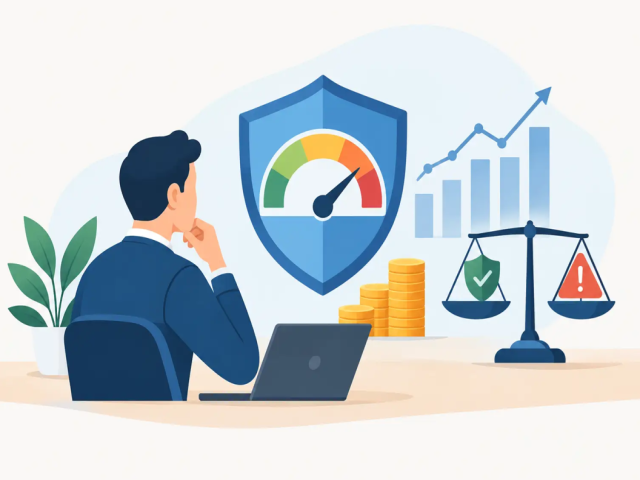
Learn how to assess investment risk by matching goals, time horizon, liquidity needs, and market exposure before putting money to work with clarity.
A strong return can look attractive on a screen, but the real question is whether you can stay invested when markets move against you. Learning how to assess investment risk helps you make decisions based on your financial goals, not excitement, fear, or a single promising performance figure.
Risk is not a reason to avoid investing. It is the price of participating in markets that can create long-term growth and passive income. The goal is to understand the risk you are taking, decide whether it fits your circumstances, and build an investment approach you can hold with confidence.
What Investment Risk Really Means
Investment risk is the possibility that an outcome differs from what you expect. That may mean your portfolio declines in value, returns arrive later than planned, an asset becomes difficult to sell, or income is lower than anticipated.
Different investments carry different types of risk. Equities can fluctuate sharply when earnings, economic conditions, or investor confidence change. Currencies respond to interest rates and geopolitical events. Cryptocurrencies may experience significant price swings in a short period. Commodities can be affected by supply disruptions, weather, and global demand.
Higher potential returns often come with higher uncertainty, but that does not mean every high-risk opportunity is suitable or every lower-risk option is automatically safe. Cash can lose purchasing power to inflation. A concentrated portfolio can become vulnerable even when it holds assets that appear familiar. The right level of risk depends on what you need your money to do.
Start With Your Financial Timeline
Your time horizon is one of the clearest ways to assess whether an investment fits your situation. Money needed for a rent payment, business expense, tuition bill, or large purchase within the next few months should generally not depend on assets that may decline before you need to withdraw.
A longer timeline can give a portfolio more opportunity to recover from normal market volatility. For example, an investor building wealth over 10 years may be able to accept more movement in portfolio value than someone planning to use the funds in 12 months.
Ask yourself when you may realistically need access to the money. Be specific. “Long term” is not a plan unless you can attach it to a goal, such as retirement, a home purchase, business expansion, or future income support.
Match the Program to the Purpose
Short-term investment goals usually call for greater attention to liquidity and capital stability. Mid-term goals may allow for a measured mix of growth and defensive positioning. Long-term goals can often support broader market exposure, provided you understand that market value can rise and fall along the way.
This is where managed investment programs can be useful for investors who want exposure without handling daily trading decisions. However, outsourced management does not remove market risk. It changes who executes the strategy, not the fact that markets can move unpredictably.
Measure Your Ability to Handle a Loss
Risk tolerance is personal. Two investors with the same income can react very differently to a 10% portfolio decline. One may view it as a temporary market movement. Another may feel pressure to withdraw at the worst possible time.
A practical test is to consider a decline before it occurs. If you invested $10,000 and the account value temporarily fell to $8,500, would you have enough financial stability and emotional comfort to stay with your plan? If the answer is no, your allocation may be too aggressive.
Your ability to take risk also matters. Maintain an emergency reserve before committing money to market-based investments. Avoid using funds needed for high-interest debt payments or essential expenses. Passive income should support your financial well-being, not create a new source of stress.
Review Where Returns Could Come From
Every investment should have a clear return story. You do not need to become a professional trader, but you should be able to understand the basic source of potential profit.
With equities, returns may come from business growth, dividends, and market appreciation. With currencies, opportunities may be tied to changes in economic policy and exchange rates. Cryptocurrency returns can depend heavily on adoption, market sentiment, liquidity, and regulation. Commodities may move because of supply and demand conditions.
If you cannot explain why an investment could generate returns, pause before committing funds. A simple explanation is often a good sign. A confusing explanation filled with pressure, vague promises, or guaranteed outcomes deserves extra caution.
No legitimate market strategy can eliminate uncertainty. Historical results, market commentary, and analyst activity can provide context, but they cannot guarantee future profit.
Look at Concentration and Diversification
One of the fastest ways to increase portfolio risk is to place too much capital in one asset, sector, country, or market theme. A portfolio built entirely around one fast-moving cryptocurrency, one technology stock, or one currency position may deliver strong gains in favorable conditions, but it can also experience sharp losses when conditions change.
Diversification spreads exposure across different assets whose performance drivers are not identical. A blend of equities, currencies, indices, commodities, and other suitable instruments may reduce the impact of a single market event. It does not guarantee a gain or prevent losses, but it can make risk more manageable.
Diversification should still be intentional. Holding many investments that all react the same way to rising rates or slowing growth is not true diversification. Focus on the role each holding plays in your overall plan.
Check Liquidity Before You Commit
Liquidity means how easily you can access your money. This matters more than many investors realize. An investment may appear profitable on paper, but if withdrawal rules, lock-up periods, processing times, or market conditions limit access, it may not fit a short-term need.
Before funding an investment account, understand the deposit and withdrawal process, any applicable conditions, and the expected timing. Platforms that provide account visibility and transaction records can help you monitor your position, but transparency is most useful when you review it regularly.
For investors using crypto funding, there is an additional layer to consider. Blockchain transfers can be irreversible, asset values can change quickly, and network fees may vary. Confirm wallet details carefully and keep records of every transaction.
Evaluate the Platform and Its Process
Assessing investment risk also means assessing operational risk. Even a sensible investment strategy can be undermined by weak security, unclear reporting, poor communication, or a platform that does not explain how client funds and performance are handled.
Look for clear information about the investment process, risk disclosures, withdrawal procedures, account access, and profit arrangements. If a service uses professional market monitoring or analyst-led execution, understand what that means in practice. Are decisions based on a defined strategy? How is performance reported? What happens during periods of market stress?
At Budrigantrade, investors can pursue managed market exposure across several asset classes while maintaining visibility into their account activity. Still, every investor should review a program’s terms, align the timeline with personal goals, and invest only capital they can afford to place at market risk.
Avoid Decisions Driven by Urgency
Urgency is often expensive. A fast-rising market can make waiting feel like missing out, while a sharp decline can make selling feel like the only safe choice. Neither reaction automatically serves your plan.
Set your investment amount, preferred time horizon, and acceptable risk level before market headlines influence the decision. Review your portfolio on a schedule rather than reacting to every daily move. For many investors, a monthly or quarterly review provides enough visibility without turning investing into a source of constant anxiety.
If your circumstances change, your strategy should change too. A new business obligation, reduced income, upcoming purchase, or shifting family need can justify a more conservative approach. Risk assessment is not a one-time form. It is an ongoing financial habit.
Build Confidence Through Clarity
The best investment decision is rarely the one with the most dramatic projected return. It is the one you understand, can afford, and can stay committed to through normal market uncertainty. Define your goal, protect your essential cash needs, diversify thoughtfully, and know how quickly you may need access to funds.
When you assess risk before you invest, you give your capital a clearer purpose. That clarity makes it easier to pursue growth opportunities with discipline, patience, and a stronger foundation for long-term financial well-being.
Recent Posts
-

Asset Allocation Strategies for Passive Growth
26 Nov 2026
-

Spot Crypto Versus Crypto Funds: Which Fits?
26 Nov 2026
-

Multi Asset Investing Guide for Smarter Growth
26 Nov 2026
-

Asset Classes: Build a Smarter Investment Mix
26 Nov 2026
-
Custodial Wallets Versus Exchanges Explained
17 Nov 2026
-

-

12 Best Questions for Investment Providers
17 Nov 2026
-

Why Markets Fluctuate and What It Means for You
17 Nov 2026
-

How Decentralized Finance Regulation Affects You
17 Nov 2026
-

-

-
-

7 Best Automated Savings Methods for Investors
10 Nov 2026
-
What Causes Market Volatility? Key Drivers
10 Nov 2026
-

Small Business Treasury Allocation That Works
09 Nov 2026