Asset Classes: Build a Smarter Investment Mix
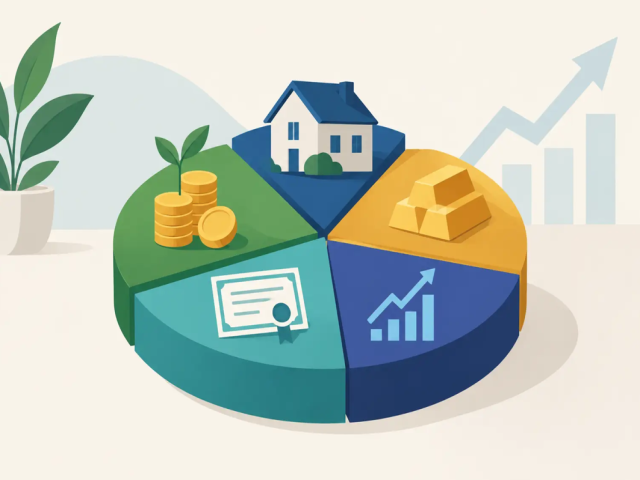
Understand asset classes and build a diversified investment approach with equities, crypto, currencies, commodities, and indices matched to your goals.
A portfolio built around one market can feel exciting when that market rises and stressful when it turns. Asset classes give investors a practical way to spread opportunity across different parts of the global economy instead of tying every financial goal to a single price chart.
For investors seeking passive income and long-term financial well-being, the point is not to own everything at once. It is to understand what each market can contribute, where its risks sit, and how a managed strategy can help keep decisions aligned with your goals while markets move around the clock.
What Are Asset Classes?
Asset classes are broad groups of investments that tend to share similar market behavior, risk characteristics, and return potential. Equities, currencies, cryptocurrencies, commodities, and market indices each respond to different economic forces. That difference is what makes a mix of assets useful.
When interest rates change, currencies may react quickly. When supply disruptions affect energy or agriculture, commodities can move sharply. When a company grows earnings, its shares may benefit. Crypto markets may create high-growth opportunities but can also experience rapid price swings. No single asset class performs best in every market environment.
A thoughtful portfolio uses that reality. Rather than trying to predict one perfect trade, investors can build exposure across markets with different drivers. This can reduce reliance on any one position, although diversification cannot eliminate losses or guarantee profits.
The Main Asset Classes Investors Should Know
Equities
Equities represent ownership in publicly traded companies. They are often a central part of long-term wealth-building strategies because businesses can grow revenues, profits, and market value over time.
The opportunity is clear: a well-positioned company can deliver meaningful gains as its business expands. The trade-off is that stock prices can fall because of weaker earnings, industry pressure, changing rates, or broad market uncertainty. Equities generally suit investors who can accept market movement in exchange for long-term growth potential.
Currencies
Currency markets, often called forex markets, involve the exchange rates between national currencies such as the US dollar, euro, yen, and British pound. These markets are influenced by central bank policy, inflation, trade data, political developments, and global investor sentiment.
Currencies can add a different source of opportunity to a portfolio because they do not move only on corporate earnings or stock-market headlines. At the same time, forex markets can move rapidly, especially around economic announcements. Active monitoring and disciplined risk management matter greatly in this asset class.
Cryptocurrencies
Cryptocurrencies have become a major part of the online investment conversation. Digital assets can provide exposure to technology-driven markets, global demand, and new financial infrastructure. Their accessibility also makes them appealing to investors who want flexible funding options and around-the-clock market access.
That potential comes with higher volatility. Crypto prices can rise or fall dramatically in a short period, often in response to regulation, liquidity conditions, adoption news, or shifts in market sentiment. Crypto may fit investors who understand that higher upside potential usually requires a stronger tolerance for price swings and a clear position-sizing plan.
Commodities
Commodities are physical goods such as gold, silver, crude oil, natural gas, wheat, and coffee. Their prices are shaped by supply, demand, weather, production decisions, geopolitical events, and changes in industrial activity.
Commodities can offer diversification because their price drivers are often different from those of stocks and currencies. Gold, for example, may attract attention during periods of uncertainty, while energy markets can respond to global supply disruptions. However, commodity prices can be unpredictable, and they do not always produce the steady upward pattern investors may expect from growing businesses.
Indices
An index tracks the performance of a group of securities or a defined market segment. Major stock-market indices can provide broad exposure to companies across sectors, while specialized indices may focus on technology, energy, emerging markets, or other themes.
Strictly speaking, an index is often a way to gain exposure rather than a separate underlying asset class. For investors, though, index-based exposure can be a straightforward way to participate in a broader market without concentrating capital in a handful of individual companies. It can be useful for building core market exposure while limiting company-specific risk.
Why a Mix of Asset Classes Matters
The strongest reason to combine asset classes is simple: markets do not move in unison. A period that challenges growth stocks may create opportunities in currencies, commodities, or defensive sectors. A market recovery may favor equities and broader indices. The right balance depends on your timeline, income needs, risk tolerance, and existing financial commitments.
An investor saving for a major purchase within a year may prioritize capital awareness and shorter investment horizons. Someone building long-term wealth may be more willing to accept temporary market fluctuations. A business investor may want to avoid having all available capital tied to the same economic outcome that affects its operations.
Diversification should not become random allocation. Holding several assets that react to the same headline does not necessarily create meaningful balance. The goal is purposeful exposure: positions selected because they play different roles in the overall strategy.
How to Build an Asset-Class Strategy Around Your Goals
Start with the purpose of your capital. Are you aiming for near-term cash flow, a future purchase, wealth accumulation, or an additional source of passive income? The answer affects how much volatility you may be able to handle and how long you can leave funds invested.
Next, be honest about your comfort with risk. High-volatility markets can create opportunity, but they can also test an investor's discipline. If a sharp price decline would force you to withdraw at the wrong time, a heavily concentrated allocation may not fit your situation.
Then consider your investment horizon. Short-term strategies may focus more on market conditions and capital availability. Mid-term strategies can balance opportunity with flexibility. Long-term strategies may allow more room for assets that need time to work through normal market cycles. There is no universal allocation that fits every investor.
Finally, decide how actively you want to manage the process. Monitoring multiple markets, interpreting economic data, and executing trades consistently requires time and experience. Managed investment services can appeal to investors who want market participation without personally handling every entry, exit, and portfolio adjustment.
Managed Exposure Without the Daily Trading Burden
A managed approach is designed for people who want access to global markets but do not want trading to become a second job. Instead of reacting emotionally to every chart movement, investors can focus on their funding goals, preferred timeline, and portfolio visibility while analysts monitor market developments and execute within a defined strategy.
At Budrigantrade, managed exposure can include equities, currencies, cryptocurrencies, commodities, and indices, supported by ongoing market monitoring and analytical review. This model is built for investors who value convenience, transparent account access, and the ability to participate in market opportunities without needing advanced trading knowledge.
Convenience should never replace due diligence. Before committing funds, review the investment terms, understand the withdrawal process, consider how profits and fees are structured, and invest only capital you can reasonably commit. A professional-looking dashboard is helpful, but your decisions should still be grounded in your own financial position and risk capacity.
Asset Classes Work Best With Discipline
Market opportunity is real, but it is rarely linear. The investor who expects every position to rise every week is likely to make poor decisions when normal volatility arrives. A clearer mindset is to treat your portfolio as a working plan: one that can pursue growth and income while acknowledging that each market carries its own conditions.
Choose exposure that supports the life you want to build, keep your time horizon in view, and let disciplined allocation do more of the work than emotion. The right mix of asset classes is not about chasing every move. It is about creating a more intentional path toward financial progress.
Recent Posts
-

Asset Allocation Strategies for Passive Growth
26 Nov 2026
-

Spot Crypto Versus Crypto Funds: Which Fits?
26 Nov 2026
-

Multi Asset Investing Guide for Smarter Growth
26 Nov 2026
-

How to Assess Investment Risk Before You Invest
26 Nov 2026
-
Custodial Wallets Versus Exchanges Explained
17 Nov 2026
-

-

12 Best Questions for Investment Providers
17 Nov 2026
-

Why Markets Fluctuate and What It Means for You
17 Nov 2026
-

How Decentralized Finance Regulation Affects You
17 Nov 2026
-

-

-

-

7 Best Automated Savings Methods for Investors
10 Nov 2026
-
What Causes Market Volatility? Key Drivers
10 Nov 2026
-

Small Business Treasury Allocation That Works
09 Nov 2026