24 Hour Market Monitoring Benefits Investors
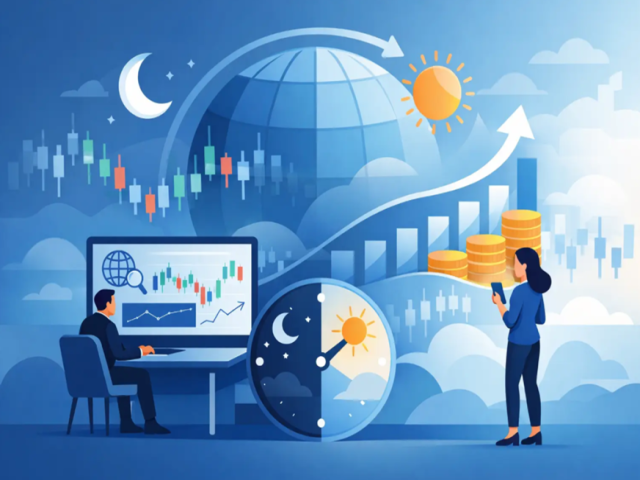
See how 24 hour market monitoring benefits investors through faster risk awareness, global opportunity coverage, and a more confident passive strategy.
Markets do not wait for a convenient time. A currency move can begin during the US night, crypto can react on a weekend, and an earnings surprise can reshape sentiment before the opening bell. That is where 24 hour market monitoring benefits become meaningful for investors who want managed market exposure without spending their personal time tracking every chart, headline, and price movement.
For people building passive income, constant oversight is not about watching a screen all day. It is about having a process that can recognize changing conditions, assess the potential impact on a portfolio, and act according to a defined strategy. With global markets connected more closely than ever, a portfolio deserves attention beyond standard business hours.
Why 24 Hour Market Monitoring Benefits Matter
A managed investment strategy is only as responsive as the information behind it. Equities, foreign exchange, commodities, indices, and digital assets each operate on different schedules and react to different forces. Some markets close overnight. Others, especially crypto and foreign exchange, can remain active almost continuously.
This creates a practical challenge for self-directed investors. You may research an opportunity carefully on Sunday afternoon, only to find that market conditions have materially changed while you were working, sleeping, or focused on your family. Monitoring activity across time zones helps reduce that information gap.
For a managed service, continuous observation supports better awareness of price volatility, breaking economic news, technical levels, and shifts in broader market sentiment. It does not eliminate market risk, and no monitoring system can guarantee a profit. It does, however, create the opportunity to respond with more discipline than a strategy that only checks conditions once or twice a day.
Global opportunities do not follow one clock
The financial markets move around the world. Asian trading can influence European sentiment, European data can affect US futures, and US policy announcements can send reactions through currency, commodity, and crypto markets within minutes. Investors with global exposure need a framework that recognizes this chain reaction.
Around-the-clock monitoring can help an investment team identify where attention is needed as liquidity and momentum shift from one region to another. For example, a major central-bank statement may influence currency pairs immediately, then affect commodity pricing and equity sectors as participants reconsider inflation, growth, or interest-rate expectations.
The goal is not to trade every move. Excessive trading can create costs and encourage emotional decisions. The advantage is having timely market visibility so decisions are made from current conditions rather than stale information.
Faster risk awareness supports better decisions
Risk cannot be removed from investing, but it can be managed with greater care. Sudden price swings, unexpected geopolitical developments, liquidity changes, or unusually high volatility can alter the risk profile of an open position. A strategy built around regular monitoring has a better chance to recognize those changes early.
That awareness may lead to many possible actions depending on the investment plan: reducing exposure, protecting a portion of gains, waiting for confirmation, diversifying into another market, or maintaining the position when the original thesis remains intact. The right choice depends on the asset, time horizon, liquidity, and the investor’s broader objectives.
For long-term investors, constant monitoring does not mean constant intervention. In fact, long-term strategies often benefit from patience. Yet patience is stronger when it is informed. Knowing that analysts and market systems are watching material developments can bring greater confidence to an investor who does not want to manage trading decisions alone.
24 Hour Market Monitoring Benefits for Passive Investors
Passive investors are often busy investors. They may be professionals building wealth alongside a career, entrepreneurs managing a business, or families setting aside capital for future goals. They want market participation, but they do not want every price movement to become another demand on their schedule.
Continuous market coverage turns a complex activity into a more accessible managed experience. Instead of trying to learn multiple trading platforms, interpret technical indicators, and follow overnight headlines, the investor can focus on funding goals, selecting an appropriate investment horizon, and reviewing portfolio activity with clarity.
Budrigantrade is built around this kind of accessible market participation, combining managed exposure with portfolio visibility for investors who want their capital working across global opportunities. The emphasis is not on asking clients to become traders. It is on providing a simpler path to professionally monitored market engagement.
It reduces the pressure to react emotionally
Many costly investment decisions are made under pressure. A sharp decline can create fear, while a fast rally can create the fear of missing out. When investors are personally responsible for every decision, it is easy to chase momentum, exit too early, or abandon a plan after a difficult day.
A monitored, rules-based approach adds distance between market noise and action. Fundamental analysis can help assess the larger economic picture, while technical analysis can help identify price behavior, momentum, and potential entry or exit levels. Together, these tools give a strategy more structure than an impulse driven by a social media post or a single headline.
This is especially valuable in crypto markets, where trading never truly closes and sentiment can change quickly. The convenience of 24/7 access is also a responsibility. Investors need to understand that always-open markets can create both opportunities and higher volatility.
It makes diversification more practical
Holding different asset classes does not automatically create a balanced portfolio. Correlations can change during periods of stress, and assets that normally move differently may suddenly decline together. Monitoring multiple markets can help identify when those relationships are shifting.
A diversified managed approach can include equities for corporate growth potential, currencies for global macro opportunities, commodities for exposure to supply and demand dynamics, indices for broader market participation, and cryptocurrencies for digital-asset exposure. The appropriate mix depends on risk tolerance, investment duration, and financial goals.
Not every investor needs every asset class. Someone pursuing a short-term objective may prioritize liquidity and a clearly defined timeline. Someone investing for long-term wealth may be more comfortable with measured exposure to assets that can experience meaningful short-term fluctuations. Transparent monitoring and visible account activity help investors understand how their chosen approach is being managed.
Monitoring Is Most Valuable When It Has a Process
Watching markets has little value if there is no decision framework behind it. A useful monitoring process combines data with judgment. It considers what happened, why it happened, whether the move changes the investment outlook, and whether action fits the strategy rather than the emotion of the moment.
At its best, that process includes continuous market observation, fundamental research, technical evaluation, position oversight, and performance reporting. These elements work together. A technical signal without context can be misleading. A strong economic thesis without attention to market timing can also expose capital to unnecessary volatility.
Automation can improve speed and consistency, particularly for alerts, account operations, and routine monitoring. Still, automated tools should be paired with human review where market conditions become unusual or complex. Financial markets do not always behave as historical patterns suggest.
Transparency matters here as much as speed. Investors should be able to see their account information, understand the terms of their investment program, and know how profits, commissions, deposits, and withdrawals are handled. Monitoring is more reassuring when it is connected to clear reporting rather than vague promises.
What Investors Should Consider Before Choosing Managed Exposure
Twenty-four-hour oversight is a meaningful operational advantage, but it should not be the only factor in an investment decision. Investors should consider their time horizon, capacity for loss, liquidity needs, and comfort with market fluctuations. They should also review program terms carefully, including how returns are calculated, when funds may be withdrawn, and what fees or profit-sharing arrangements apply.
Shorter programs may appeal to people who value quicker access to capital, but they can require a different risk approach than long-term investment plans. Longer horizons may give a strategy more time to work through normal market cycles, though they also require patience and a willingness to stay focused on the larger objective.
It is wise to invest only capital you can afford to commit and to avoid treating past performance or market commentary as a promise of future results. Strong monitoring improves readiness. It cannot control inflation data, policy decisions, earnings surprises, or sudden changes in investor sentiment.
The real value of 24-hour market monitoring is peace of mind with perspective: your investment strategy can remain attentive to a world that keeps moving, while you remain focused on the financial goals that matter most to you.
Recent Posts
-

When Should Portfolios Rebalance for Growth?
08 Oct 2026
-
Platform Security Review for Confident Investors
08 Oct 2026
-

How to Invest Business Cash Reserves Wisely
08 Oct 2026
-
How to Calculate Compound Returns on Investments
08 Oct 2026
-

Alternative Assets Trends Reshaping Portfolios
08 Oct 2026
-
How to Read Portfolio Drawdowns With Confidence
06 Oct 2026
-
-

Are Investment Platforms Regulated in the US?
06 Oct 2026
-

How to Diversify Income Streams With Purpose
06 Oct 2026
-
Crypto Custody Service Review for Investors
06 Oct 2026
-

A Small Business Cash Reserve Example That Works
23 Sep 2026
-

Retirement Planning That Builds Real Flexibility
23 Sep 2026
-

Stocks Versus Bonds Allocation for Your Goals
23 Sep 2026
-

15 Best Investor Due Diligence Questions
23 Sep 2026
-

15 Best Investor Due Diligence Questions
23 Sep 2026