How Online Asset Management Builds Passive Income
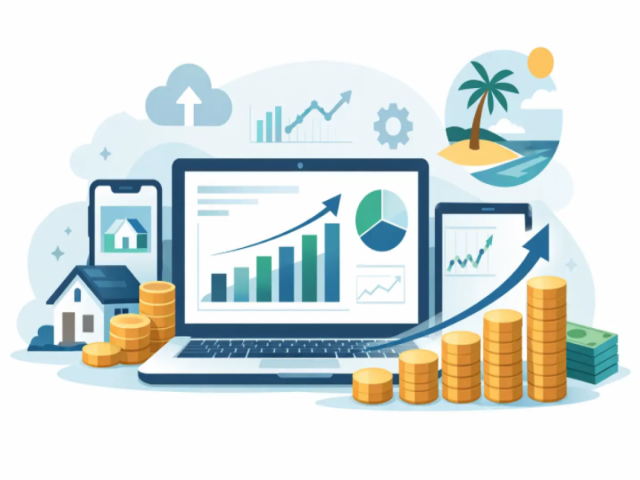
Online asset management gives investors managed market exposure, portfolio visibility, and a practical path toward diversified passive income potential.
A market opportunity can appear while you are commuting, working, sleeping, or focused on your business. That is the practical appeal of online asset management: your capital can remain connected to global markets without requiring you to watch every chart, news alert, or price movement yourself.
For investors who want more than cash sitting idle but do not want the pressure of daily trading, managed investing creates a clearer path forward. You choose a funding level and investment horizon, while experienced market participants handle research, position management, and ongoing monitoring. The goal is simple: put your money to work with a strategy built around financial growth, transparency, and convenience.
What Online Asset Management Actually Does
Online asset management is the digital process of placing capital into professionally managed market strategies. Rather than selecting every stock, currency pair, cryptocurrency, commodity, or index on your own, you gain exposure through a management approach designed to identify opportunities and manage positions over time.
The technology matters because it gives investors direct access to their accounts. You can review balances, follow account activity, fund an investment program, and request withdrawals from one place. That visibility helps turn managed investing from a distant, confusing service into an experience you can monitor on your own schedule.
The management side matters just as much. Markets operate across time zones, react quickly to economic data, and can move sharply when sentiment changes. A dedicated team can follow these conditions throughout the day, combining fundamental research with technical analysis to make informed trading decisions. No strategy can remove market risk, but professional oversight can offer a more disciplined alternative to emotional, do-it-yourself decisions.
Managed exposure is different from active trading
Active trading demands time, knowledge, and emotional control. You need to understand entry points, risk limits, market liquidity, news catalysts, and when to exit a position. Many people begin with enthusiasm, then find that the time commitment conflicts with their career, family responsibilities, or business goals.
Managed exposure shifts those daily responsibilities to the investment operator. You remain in control of your funding decisions and time horizon, but you are not expected to become a full-time market analyst. This approach is especially attractive to professionals, first-time investors, and entity-based investors seeking a more efficient way to pursue diversified income opportunities.
Why Global Market Access Can Strengthen a Portfolio
Keeping all capital tied to one asset class can leave an investor overly dependent on a single market outcome. Online management programs can provide exposure across equities, fiat currencies, cryptocurrencies, indices, and commodities. Each market responds differently to interest rates, corporate earnings, inflation, geopolitical events, and shifts in investor confidence.
Diversification does not guarantee a profit or prevent losses. It does, however, create more than one potential source of return. When one market is quiet or under pressure, another may offer stronger conditions. A global approach gives managers a broader field of opportunities instead of forcing every decision into one type of investment.
For example, equities may be influenced by company performance and broad economic growth, while currency markets can react to central bank decisions. Commodities may respond to supply disruptions, and digital assets can move on technology developments or market participation. The value of a managed strategy is not that it predicts every movement perfectly. Its value is the ability to assess changing conditions and act with a defined process.
Your time horizon should shape your expectations
Short-, mid-, and long-term investment programs serve different goals. A shorter horizon may appeal to an investor planning for a near-term expense or looking for more frequent access to capital. A longer horizon may better suit someone focused on wealth accumulation and willing to allow time for a strategy to develop.
Neither option is automatically better. The right fit depends on your financial priorities, liquidity needs, comfort with market movement, and the amount you can afford to commit. Capital needed for rent, payroll, emergency expenses, or high-interest debt should not be treated as investment capital.
A thoughtful investor also avoids judging a program based on a single day or week. Markets do not move in a straight line. Performance can fluctuate, and past results never guarantee future outcomes. A realistic time horizon gives a managed strategy room to operate while helping you avoid decisions driven by short-term anxiety.
What to Look for in an Online Asset Management Platform
Convenience should never mean giving up clarity. Before funding an account, look closely at how the platform explains its investment programs, profit structure, withdrawal process, and account visibility. A good digital experience makes it easy to understand where you stand without burying critical details behind complicated language.
Transparency is especially valuable when another party is managing market activity on your behalf. Investors should be able to review account information, understand the applicable commission arrangement, and know how deposits and withdrawals are handled. A profit-based commission model can align the manager's compensation with positive performance, though investors should still read the terms carefully and understand how profits are calculated.
Security and accessibility also deserve attention. Many modern investors prefer flexible funding options, including digital assets, because they can move capital internationally with fewer traditional banking delays. That convenience comes with responsibility. Confirm account security practices, use strong login credentials, and understand the transaction process before sending funds.
The best tools reduce friction, not accountability
Automation can make investing easier. Automatic deposits may help investors build a consistent contribution habit, while straightforward withdrawal features can make account management feel more practical. But automation should support a plan, not replace one.
Set a contribution amount that fits your budget. Decide whether your priority is potential cash flow, long-term growth, or a blend of both. Then review your account periodically rather than reacting to every market headline. The purpose of managed investing is to reduce the burden of execution, not to encourage impulsive decisions.
A Smarter Way to Start With Online Asset Management
Start with a clear number. Determine how much capital you can allocate after covering essential expenses, emergency savings, and existing obligations. Beginning with an amount that feels manageable can help you learn the platform and your own risk tolerance without putting unnecessary pressure on your finances.
Next, choose a time frame that matches your goal. If you need access to the money soon, prioritize liquidity and understand any program requirements. If your objective is building future financial flexibility, a longer-term approach may be more appropriate. Be honest about what you need the money to do for you.
Then, pay attention to visibility. Review your dashboard, transaction history, and program information so you understand the relationship between funding, market activity, and available balance. Online investing should feel accessible, but it should never be completely hands-off in the sense of being ignored.
Budrigantrade is built around this balance of accessibility and active market oversight, giving investors a simplified way to participate in global financial markets while keeping portfolio information within reach. Its approach is designed for people who want market exposure without taking on the daily workload of independent trading.
Passive Income Requires Patience and Perspective
The phrase passive income can create unrealistic expectations when it is treated as effortless or guaranteed. Managed investing can reduce the amount of work you personally perform, but it does not eliminate risk. Markets can rise, fall, and change direction quickly. Responsible investors understand that potential returns are tied to uncertainty.
That perspective is not a reason to avoid opportunity. It is a reason to participate with discipline. Use diversification where appropriate, avoid concentrating all available capital in one program, and maintain a financial cushion outside your investment account. If your circumstances change, revisit your investment horizon instead of forcing a plan that no longer fits.
A well-chosen online asset management program can give your capital a defined role in your larger financial life. Let it support your goals, respect your need for flexibility, and work alongside a plan you can stay committed to when markets become unpredictable.
Recent Posts
-

When Should Portfolios Rebalance for Growth?
08 Oct 2026
-
Platform Security Review for Confident Investors
08 Oct 2026
-

How to Invest Business Cash Reserves Wisely
08 Oct 2026
-

How to Calculate Compound Returns on Investments
08 Oct 2026
-

Alternative Assets Trends Reshaping Portfolios
08 Oct 2026
-

How to Read Portfolio Drawdowns With Confidence
06 Oct 2026
-
-

Are Investment Platforms Regulated in the US?
06 Oct 2026
-

How to Diversify Income Streams With Purpose
06 Oct 2026
-
Crypto Custody Service Review for Investors
06 Oct 2026
-

A Small Business Cash Reserve Example That Works
23 Sep 2026
-

Retirement Planning That Builds Real Flexibility
23 Sep 2026
-

Stocks Versus Bonds Allocation for Your Goals
23 Sep 2026
-

15 Best Investor Due Diligence Questions
23 Sep 2026
-

15 Best Investor Due Diligence Questions
23 Sep 2026