Fundamental and Technical Analysis Service
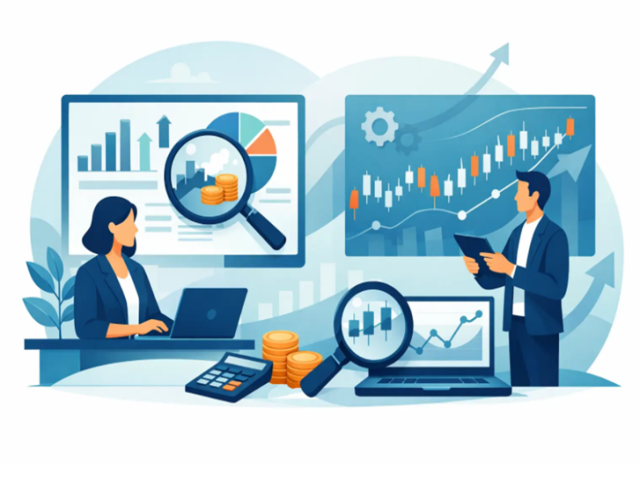
A fundamental and technical analysis service helps investors pursue informed market exposure with professional monitoring and a clear, goal-based approach.
Markets can move while you are at work, asleep, or focused on running your business. A fundamental and technical analysis service gives investors a way to participate in those opportunities without having to watch every price chart, earnings report, currency move, or crypto headline themselves.
For people seeking passive income and long-term wealth growth, the real value is not simply having access to global markets. It is having a structured process behind each decision. Fundamental research helps identify what may be worth owning or avoiding. Technical analysis helps determine when market conditions may support an entry, exit, or risk adjustment. Together, they turn market information into a more disciplined investment approach.
What a Fundamental and Technical Analysis Service Does
A managed analysis service studies the forces that drive asset prices and translates them into portfolio decisions. This can include equities, currencies, cryptocurrencies, indices, and commodities, each of which responds to a different mix of economic data, investor sentiment, supply and demand, and market momentum.
Fundamental analysis focuses on the underlying story. For a stock, that may mean revenue trends, profitability, debt, competitive position, management decisions, and industry conditions. For currencies, analysts may assess interest rates, inflation, employment data, and central bank policy. In crypto markets, adoption trends, network activity, liquidity, regulation, and broader risk appetite can all influence the outlook.
Technical analysis focuses on market behavior. Analysts review price charts, trends, trading volume, support and resistance levels, volatility, and momentum indicators. The goal is not to claim certainty about tomorrow's price. It is to identify probabilities, manage timing, and respond to changing conditions with greater consistency.
When these methods work together, an investor does not need to choose between the business reality behind an asset and the market behavior surrounding it. Both perspectives matter.
Why Using Both Methods Can Improve Decision-Making
Fundamental research can point to an asset with a compelling longer-term outlook, but markets do not always move in a straight line. A strong company can decline during a broad market selloff. A currency supported by high interest rates can still weaken when global risk sentiment shifts. Technical analysis helps a managed team recognize those conditions and consider whether timing or position sizing should change.
The reverse is also true. A chart may show a strong upward trend, yet the move may be vulnerable if the underlying asset faces deteriorating earnings, weak economic conditions, or a major policy risk. Technical signals without context can lead investors to chase short-lived momentum.
A combined process offers a more complete view. Fundamental analysis answers, "What is driving value?" Technical analysis asks, "What is the market doing with that information right now?" Neither eliminates risk, but together they can support more thoughtful exposure than reacting to headlines or following social-media excitement.
From Market Research to Managed Exposure
Research only matters when it is applied with clear rules. A professional investment process typically begins by defining the investment horizon. Short-term strategies may respond more closely to price action, volatility, and upcoming events. Mid-term strategies may combine trend analysis with economic and company-level developments. Long-term allocations generally place greater weight on fundamentals while still using technical conditions to manage entries and portfolio risk.
This distinction matters because a short-term cash-flow goal and a long-term wealth-building goal should not be treated the same way. Investors often make poor decisions when they use money needed soon for a strategy designed to withstand longer periods of market movement.
At Budrigantrade, market monitoring is designed to support managed exposure across multiple global asset classes. Investors can follow their account activity and select programs that align more closely with their intended timeline, while the analysis and day-to-day market execution remain with the investment team.
That model is especially useful for professionals, entrepreneurs, and newer investors who want market participation but do not have the time or confidence to trade independently. Instead of building a personal trading routine around charts, news alerts, and constant order management, they can focus on their goals while professionals monitor market conditions.
The Value of 24/7 Market Monitoring
Global markets rarely pause. Crypto trades around the clock. Currency markets can react quickly to international policy decisions. Index futures may move before the US market opens. Commodity prices can shift after supply disruptions, weather events, or geopolitical developments.
That does not mean every price movement requires action. Frequent activity is not automatically better investing. The value of continuous monitoring is the ability to distinguish ordinary noise from a development that may affect a position, a strategy, or the overall risk environment.
For example, a central bank announcement may change expectations for currency yields and equity valuations. A surprise inflation report may increase volatility across indices and commodities. A major technical breakdown may indicate that the market is no longer supporting a previously favorable trend. A prepared team can assess the situation through both fundamental and technical lenses rather than making rushed decisions after the market has already moved.
What Investors Should Expect From Transparency
Managed investing should feel understandable, even when the underlying analysis is complex. You do not need to become a chart expert to ask useful questions about how your capital is handled.
Look for clear portfolio visibility, straightforward information about program timelines, and a practical explanation of how profits and fees are treated. If a platform charges a performance-based commission, understand when it applies and what portion of generated profit it represents. You should also know the available deposit and withdrawal processes, including any conditions that may apply to a particular investment program.
Transparency does not mean promising a specific return. No legitimate market process can remove uncertainty. It means giving investors a clear view of their account, explaining the structure of the service, and communicating honestly about the fact that markets can rise or fall.
Risk Management Is Part of the Analysis
A strong fundamental and technical analysis service is not built around finding only winning trades. It is built around managing uncertainty across changing market conditions. This may involve diversifying across asset classes, limiting concentration in a single idea, adjusting exposure during elevated volatility, and matching strategy duration to an investor's financial needs.
Diversification can help, but it is not a guarantee against losses. Assets that usually move differently can decline together during periods of broad market stress. Technical tools can also produce false signals, while fundamental assumptions can change when new information emerges. That is why ongoing review matters more than a one-time market opinion.
Investors should only commit capital they can afford to keep invested according to their selected plan. Emergency savings, near-term obligations, and high-interest debt deserve separate consideration before pursuing market-based income strategies. The right level of exposure depends on personal circumstances, risk tolerance, and time horizon.
How to Choose the Right Investment Timeline
The most effective managed strategy is one that fits the purpose of your money. Someone building toward a major purchase within months may prioritize a shorter timeline and clearer liquidity expectations. Someone aiming to grow wealth over several years may be more comfortable with a longer approach that allows more time for market conditions to develop.
Before funding an account, ask yourself what you want the investment to do. Is the goal supplemental income, diversification beyond a savings account, business capital growth, or long-term financial flexibility? Then consider how much volatility you can realistically tolerate without making emotional decisions.
A disciplined investor does not judge a strategy solely by a single day or week of performance. They review whether the service, timeline, risk level, and account structure continue to fit their objectives. That mindset can make a meaningful difference when markets become uncertain.
A More Practical Way to Access Global Markets
Independent trading demands time, technical knowledge, and emotional control. It also requires investors to make decisions when information is incomplete, which is almost always the case. A managed analysis service offers a practical alternative: professional market observation, structured decision-making, and accessible account tools in one place.
The opportunity is not about predicting every move. It is about giving your capital a disciplined process, informed by fundamental research and technical market signals, while you remain focused on your work, family, and future plans. Choose an approach that is transparent about risk, aligned with your timeline, and built to support your financial well-being over time.
Recent Posts
-

Guide to Economic Indicators for Investors
22 Oct 2026
-

Retirement Portfolio Diversification Example
22 Oct 2026
-
When Portfolios Rebalance and Why It Matters
22 Oct 2026
-
How to Rebalance a Multi Asset Portfolio
22 Oct 2026
-

How to Protect Investment Accounts From Fraud
22 Oct 2026
-
What Is Investment Liquidity and Why It Matters
20 Oct 2026
-

How to Set Financial Goals That Build Wealth
20 Oct 2026
-

Robo Advisors Versus Brokers for Your Goals
20 Oct 2026
-

-

-
When Should Portfolios Rebalance for Growth?
08 Oct 2026
-

Platform Security Review for Confident Investors
08 Oct 2026
-

How to Invest Business Cash Reserves Wisely
08 Oct 2026
-
How to Calculate Compound Returns on Investments
08 Oct 2026
-

Alternative Assets Trends Reshaping Portfolios
08 Oct 2026