Why Commodity and Index Investing Works
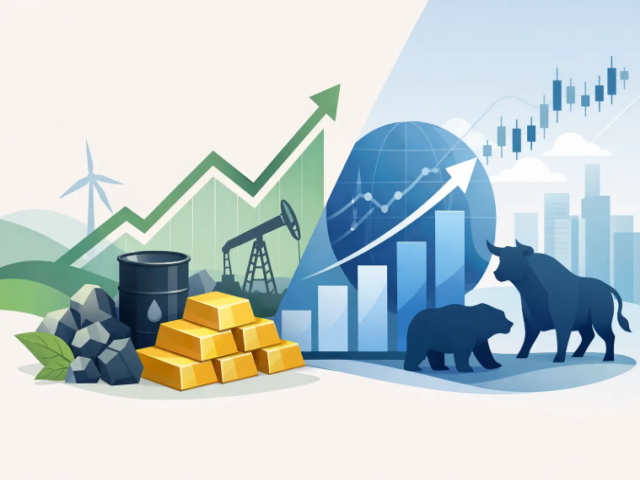
Learn how commodity and index investing can build passive income, spread risk, and give investors simpler access to global market growth.
A portfolio that rises only when one stock, one sector, or one market is hot is not a portfolio built for peace of mind. Many investors learn that the hard way. When inflation jumps, energy prices swing, or stock markets turn unpredictable, concentrated investing can feel less like strategy and more like exposure without control.
That is why commodity and index investing continues to attract attention from investors who want broader market participation without needing to trade every move themselves. It offers a more balanced way to pursue growth, hedge against uncertainty, and create room for passive income strategies that are not tied to a single narrative.
For investors who want market access with less day-to-day friction, this approach stands out because it combines simplicity with real global reach.
What commodity and index investing actually means
Commodity and index investing is exactly what it sounds like - gaining exposure to commodities such as gold, silver, oil, or agricultural products, while also investing in market indexes that track groups of stocks or sectors.
Instead of trying to pick a handful of individual winners, index exposure gives you a position in a broader slice of the market. A major stock index can reflect the performance of large companies across industries, while a commodity position can respond to inflation trends, supply shocks, geopolitical pressure, or shifts in global demand.
That combination matters because equities and commodities do not always move for the same reasons. A stock index may benefit from economic expansion, while commodities may strengthen during inflationary cycles or supply disruption. Used together, they can create a portfolio with more than one source of opportunity.
This does not mean returns move in a straight line. Commodities can be volatile, and indexes can decline during broad market selloffs. But the value of this pairing is that it avoids relying on one asset class to do all the work.
Why investors are drawn to this strategy now
Many people want financial growth, but they do not want a second full-time job. Watching charts all day, researching earnings reports, and reacting to every headline is not realistic for most working adults, side-income seekers, or business owners.
Commodity and index investing appeals to that audience because it is easier to understand than highly specialized trading strategies, yet more dynamic than leaving capital idle. It can support investors who want exposure to global financial markets while keeping the process more structured and more manageable.
There is also a practical reason this strategy resonates in uncertain periods. Indexes can capture long-term market expansion, while commodities can respond to economic stress in ways stocks often do not. When investors want both growth potential and protection against changing macro conditions, this mix becomes especially attractive.
The role of indexes in a passive growth plan
Indexes are often the foundation for investors who want broad exposure with less complexity. Rather than guessing which company will outperform, index investing gives you access to a wider market trend.
That can be powerful over time. If one company struggles, the broader index may still hold up because it includes many businesses rather than one. This diversification can reduce the impact of isolated setbacks and support a steadier long-term approach.
For passive-income-minded investors, indexes also make sense because they align with a less hands-on style. You are not trying to outtrade every market participant. You are positioning capital to benefit from broader economic activity and long-term market movement.
Of course, not all indexes behave the same way. A large-cap US stock index differs from a tech-heavy index or a global index. Some are built for stability, others for growth. The best choice depends on your goals, timeline, and tolerance for market swings.
Why commodities deserve a place in the conversation
Commodities are often misunderstood by newer investors. Some think of them as speculative only, but that misses their strategic role.
Commodities can act as a counterweight when inflation rises or when supply-side events reshape pricing across the global economy. Gold is often viewed as a defensive asset during uncertainty. Oil and natural gas can react strongly to geopolitical events. Agricultural commodities may move on weather, trade policy, and demand shifts.
This makes commodities useful not just for profit potential, but for portfolio balance. When traditional equity positions face pressure, commodity exposure can sometimes help offset that weakness. It will not always do so, and timing still matters, but the diversification value is real.
The trade-off is volatility. Commodity prices can move fast, and they can react to factors that are difficult for individual investors to track consistently. That is one reason many people prefer managed exposure instead of trying to trade commodities on their own.
Commodity and index investing as a diversification strategy
Diversification sounds simple, but many portfolios are less diversified than they appear. Owning several stocks in the same industry is still concentration. Holding assets that all depend on the same economic conditions can leave investors exposed when those conditions change.
Commodity and index investing improves diversification by introducing exposure to different market drivers. Indexes may reflect business earnings, investor sentiment, interest rates, and economic momentum. Commodities may respond more directly to inflation, production limits, currency shifts, and international disruptions.
That difference is where the strategy gains strength. It creates multiple paths for performance instead of depending on one type of market behavior.
This is especially valuable for investors focused on financial well-being and passive income. A diversified approach can support more consistent capital management and reduce the pressure to chase high-risk opportunities just to stay active.
Who this approach fits best
This strategy fits investors who want meaningful market exposure without becoming active traders. It is well suited to professionals with limited time, beginners who want a simpler path into investing, and entity-based investors seeking a more flexible way to allocate capital.
It is also a strong fit for people who think in timelines. Short-term investors may look for tactical opportunities in commodity price movement. Mid-term investors may want balanced exposure across growth and defensive assets. Long-term investors often value indexes for compounding potential while using commodities to strengthen resilience through changing market cycles.
What matters most is alignment. If your goal is steady participation in global markets with less operational stress, this approach can make a lot of sense. If your goal is aggressive short-term speculation, the same strategy may feel too measured unless it is actively managed.
Why managed access changes the experience
The biggest gap for many investors is not interest. It is execution. They understand the value of diversification, but they do not have the time, tools, or confidence to monitor commodities, indexes, currencies, and broader market conditions around the clock.
That is where managed investment access becomes compelling. With the right platform, investors can participate in commodity and index investing without handling every technical detail themselves. Market monitoring, timing decisions, and portfolio adjustments can be handled by experienced analysts and traders, while the investor remains focused on outcomes, visibility, and convenience.
This model is especially attractive for users who want passive income opportunities with lower friction. Instead of learning every market pattern from scratch, they can use a system built to simplify access while maintaining transparency.
Budrigantrade reflects this shift in what modern investors want - broad market exposure, professional oversight, and a straightforward online experience that makes participation easier for people who would rather earn from the markets than manage every trade manually.
What to keep in mind before you start
The promise of broader exposure should not be confused with guaranteed results. Indexes can decline in bear markets, and commodities can be highly reactive. Profit potential is real, but so is market risk.
That is why timeline, capital allocation, and management style matter. Investors pursuing short-term income may need a different structure than those building long-term wealth. Some may want a stronger commodity allocation during inflationary periods, while others may prefer a heavier index position for growth over time.
The smartest approach is not chasing whichever asset class had the last big move. It is choosing a strategy that matches your goals and can be managed with consistency.
A strong portfolio does not need to be complicated to be effective. When you combine commodity exposure with index access, you create a more adaptable foundation - one built to pursue opportunity across different market environments, not just the easy ones.
If your goal is to grow capital with less stress and more structure, this path deserves serious attention. The best investment approach is often the one you can stay committed to with confidence.
Recent Posts
-

When Should Portfolios Rebalance for Growth?
08 Oct 2026
-

Platform Security Review for Confident Investors
08 Oct 2026
-

How to Invest Business Cash Reserves Wisely
08 Oct 2026
-

How to Calculate Compound Returns on Investments
08 Oct 2026
-

Alternative Assets Trends Reshaping Portfolios
08 Oct 2026
-

How to Read Portfolio Drawdowns With Confidence
06 Oct 2026
-

-

Are Investment Platforms Regulated in the US?
06 Oct 2026
-

How to Diversify Income Streams With Purpose
06 Oct 2026
-

Crypto Custody Service Review for Investors
06 Oct 2026
-

A Small Business Cash Reserve Example That Works
23 Sep 2026
-

Retirement Planning That Builds Real Flexibility
23 Sep 2026
-

Stocks Versus Bonds Allocation for Your Goals
23 Sep 2026
-

15 Best Investor Due Diligence Questions
23 Sep 2026
-

15 Best Investor Due Diligence Questions
23 Sep 2026