Market Event Investing That Fits Real Goals
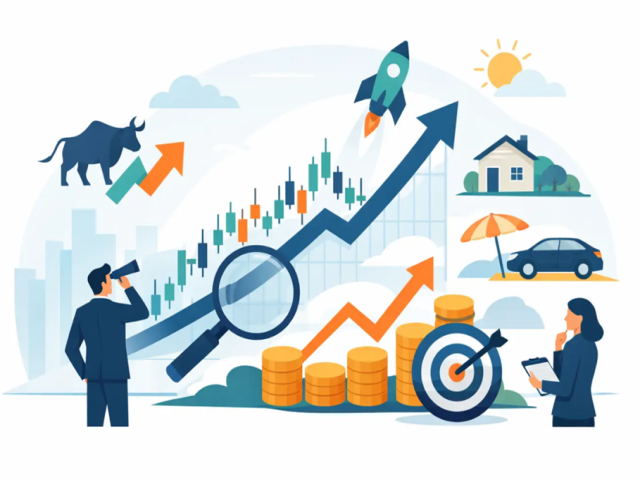
Market event investing helps investors act on price-moving news with managed strategy, timing, and discipline for passive income growth.
A central bank rate decision hits at 2 p.m., a major company misses earnings after the close, or a geopolitical shock sends commodities higher before most people finish breakfast. Those moments move money fast. Market event investing is built around that reality - using known or emerging events to identify where prices may shift, where risk may rise, and where disciplined capital can be positioned for opportunity instead of reaction.
For investors who want growth without staring at charts all day, this approach matters because markets do not move in a straight line. They reprice around information. Elections, inflation reports, employment data, earnings releases, policy announcements, crypto regulation, and supply disruptions can all change direction in hours. The advantage is not just being present when something happens. It is having a process for what to do before, during, and after the event.
What market event investing really means
Market event investing is the practice of allocating capital based on the expected impact of specific market-moving events. Sometimes the event is scheduled, like an interest rate announcement or quarterly earnings report. Sometimes it is unexpected, like a banking shock, sanctions news, or a sudden move in oil supply. In both cases, the goal is the same: identify probable market response, manage downside, and capture opportunity across assets such as equities, currencies, commodities, indices, and digital assets.
This is not the same as guessing headlines. Strong event-based investing depends on preparation, not excitement. It asks practical questions. Which assets are most exposed? What has the market already priced in? Where could volatility create entry points? When does caution matter more than conviction? That is where professional monitoring and analysis make a real difference.
For everyday investors, the challenge is obvious. Events happen across time zones, often outside work hours, and they affect multiple markets at once. A US inflation print can move the dollar, stock indices, gold, and crypto in the same session. Trying to track all of that manually is difficult even for active traders. Managed exposure is often the more realistic path.
Why event-driven markets reward preparation
The biggest opportunities around events rarely come from speed alone. They come from context. A strong jobs report is not always bullish for stocks. A weak earnings release is not always bearish if expectations were already worse. Markets move on the gap between reality and expectation, and that gap can be subtle.
That is why market event investing works best when it combines fundamental analysis with technical execution. Fundamentals help frame the meaning of the event. Technicals help identify levels, momentum, and risk points once price starts moving. One without the other can lead to poor timing or false confidence.
There is also a psychological edge in having structure. Many retail investors buy after a move is already extended or panic out at the worst possible moment. Event-focused investing replaces emotional reaction with preplanned action. It is a more disciplined way to participate in volatility, and volatility is where much of the market's short-term profit potential appears.
The events that matter most
Not every headline deserves capital. Some create noise. Others change trend. Knowing the difference is part of the skill.
Macroeconomic events often have the broadest reach. Interest rate decisions, inflation data, GDP releases, and labor reports can reprice entire sectors in one session. These events matter because they change expectations for borrowing costs, consumer demand, and liquidity.
Corporate events are another major driver. Earnings, guidance revisions, mergers, leadership changes, and regulatory outcomes can reshape valuation quickly. For equity exposure, these events are often where concentrated upside or downside appears.
Then there are cross-market catalysts. Currency instability, commodity supply shocks, conflict, or major crypto regulation can spill across asset classes. A move in oil can influence inflation expectations. A stronger dollar can pressure commodities and emerging market assets. A crypto policy shift can trigger broad risk sentiment. The investor who only watches one chart often misses the full picture.
Market event investing is not about constant trading
One common misunderstanding is that event-based investing means hyperactive decision-making. It does not have to. In fact, too much trading around every headline usually reduces results. The stronger approach is selective participation.
That means focusing on high-conviction events, matching position size to uncertainty, and choosing a time horizon that fits the opportunity. Some events support short-term trades measured in hours or days. Others create medium-term trends that can run for weeks. A rate cycle, policy change, or commodity disruption can open a broader investment window rather than a single entry point.
For investors focused on passive income and capital growth, this matters. You do not need to personally execute every market decision to benefit from event-driven opportunities. What you need is a system that watches markets continuously, evaluates catalysts as they unfold, and aligns positions with the probable direction of momentum.
Where the risks are - and why they can be managed
Any honest conversation about market event investing has to include trade-offs. Events create opportunity because they create uncertainty. Price can gap, spreads can widen, and the first move is not always the right move.
Scheduled events can produce whipsaw action where markets move sharply in one direction and then reverse once traders digest the details. Unexpected events can trigger emotional selling or liquidity gaps. In both cases, timing and risk control matter as much as analysis.
That is also why event investing is often better handled through managed strategy than casual self-direction. The real job is not just spotting the event. It is deciding when to enter, when to reduce exposure, when to hedge, and when to stay out entirely. Sometimes the best trade around a major event is patience. That discipline protects capital for the next higher-probability setup.
Investors should also recognize that no strategy captures every move. Missing some opportunities is normal. Chasing every move is expensive. A credible event-based process aims for consistency, not drama.
Why managed investing fits this strategy well
Most people interested in wealth growth do not want a second full-time job. They want exposure to market opportunity with less operational stress. That is exactly why event-driven investing pairs naturally with a managed model.
A professional team can monitor markets 24/7, compare data across regions, and react when events break outside normal local hours. It can also spread attention across assets instead of forcing one investor to track equities, forex, commodities, indices, and crypto alone. That kind of coverage matters because major events do not respect office schedules.
Managed investing also improves execution quality. When a strategy is based on timing, analysis, and disciplined exposure, small decisions have outsized impact. Entering late, oversizing risk, or misreading sentiment can erase the edge quickly. Investors who prefer convenience and transparency often gain more from expert oversight than from trying to trade every event themselves.
This is where a platform such as Budrigantrade fits the expectations of modern investors. The appeal is simple: access to global market participation, ongoing monitoring, clear portfolio visibility, and investment options aligned with short-, mid-, and long-term financial goals - without the burden of handling day-to-day trading decisions alone.
How investors can think about fit
Market event investing is not a personality test. It is a strategy choice. The right question is whether you want your capital positioned to respond to what actually moves markets.
If your goal is passive income, event-driven strategies can create timely opportunities in active conditions. If your goal is long-term wealth growth, they can help capture trend changes early instead of reacting after the market has already repriced. If your goal is diversification, this approach can extend beyond stocks into currencies, commodities, indices, and crypto, where different events create different return paths.
The fit depends on your timeline and your tolerance for fluctuation. Shorter-term programs may suit investors looking for more immediate activity and cash-flow potential. Longer-term allocations may be better for those who want compounding exposure through multiple market cycles and event regimes. Neither is automatically better. The advantage comes from matching strategy to objective.
The strongest investors are not the ones who predict every headline. They are the ones whose capital is organized around how markets really move. When information changes prices, preparation becomes profit potential, and that is where event-focused investing earns its place.
Recent Posts
-

When Should Portfolios Rebalance for Growth?
08 Oct 2026
-

Platform Security Review for Confident Investors
08 Oct 2026
-

How to Invest Business Cash Reserves Wisely
08 Oct 2026
-
How to Calculate Compound Returns on Investments
08 Oct 2026
-

Alternative Assets Trends Reshaping Portfolios
08 Oct 2026
-

How to Read Portfolio Drawdowns With Confidence
06 Oct 2026
-

-

Are Investment Platforms Regulated in the US?
06 Oct 2026
-

How to Diversify Income Streams With Purpose
06 Oct 2026
-

Crypto Custody Service Review for Investors
06 Oct 2026
-

A Small Business Cash Reserve Example That Works
23 Sep 2026
-

Retirement Planning That Builds Real Flexibility
23 Sep 2026
-

Stocks Versus Bonds Allocation for Your Goals
23 Sep 2026
-

15 Best Investor Due Diligence Questions
23 Sep 2026
-

15 Best Investor Due Diligence Questions
23 Sep 2026