Why Account Visibility for Investors Matters
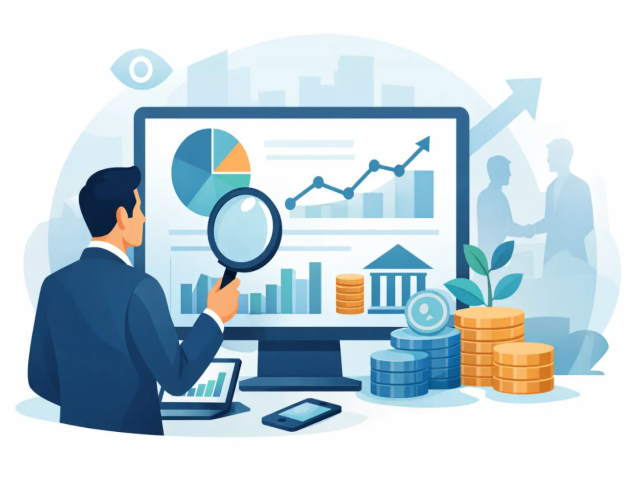
Account visibility for investors builds trust, supports better decisions, and gives passive investors clearer control over performance and cash flow.
You should never have to wonder what your money is doing after you invest it. That is the real value of account visibility for investors - not more charts for the sake of appearance, but clear insight into performance, movement, timing, and progress. For people pursuing passive income, especially through managed strategies, visibility is what turns investing from a leap of faith into a decision backed by confidence.
A lot of investors are not trying to become full-time traders. They want exposure to global markets, but they do not want to spend their evenings analyzing price action, following economic releases, or managing open positions. That is exactly why managed investing is attractive. Still, convenience only works when it is paired with transparency. If a platform promises professional execution and passive returns, investors need a way to see how their account is progressing in real terms.
What account visibility for investors actually means
At its simplest, account visibility means being able to log in and understand the condition of your investment without needing a finance degree. You should be able to see your balance, funding status, profit history, withdrawal activity, and the general direction of your account in a matter of minutes.
That sounds basic, but it has real weight. Visibility is not just a dashboard feature. It shapes how investors feel about risk, how long they stay committed to a strategy, and how much trust they place in the company managing their capital.
For beginner and hands-off investors, visibility also reduces a specific kind of stress: uncertainty. Market fluctuations are one thing. Being unable to tell whether your account is active, profitable, or processing correctly is something else entirely. One is market risk. The other is operational doubt.
Why passive investors care more than ever
Passive investors are often balancing work, family responsibilities, and other financial goals. They are not sitting in front of trading platforms all day. That means their relationship with an investment service depends heavily on what they can verify quickly and clearly.
When an account is easy to track, investors feel more in control even if they are not making the trades themselves. That matters because passive investing is never the same as careless investing. People still want to know whether their money is growing, whether profits are being generated consistently, and whether deposits and withdrawals are happening as expected.
This is especially true for investors using online platforms. Digital investing has created access, speed, and flexibility, but it has also made trust more fragile. If someone can fund an account in minutes, they also expect to monitor it without friction. Delays, vague reporting, or confusing account displays can quickly weaken confidence.
The business case for transparency
From a platform perspective, account visibility is not just a customer experience perk. It is part of the product itself. When investors can review performance, transaction history, and account status with ease, they are more likely to stay engaged, reinvest profits, and commit to longer investment timelines.
That does not mean visibility guarantees satisfaction. If results are weak, a transparent dashboard will not hide that. But serious investors usually prefer clear information over polished ambiguity. In fact, transparency can strengthen credibility even when returns vary, because it shows that the platform is willing to be measured by what actually happens.
That is one reason visibility matters in managed investment environments. If a company charges based on profit generated rather than fixed advisory fees, investors want a clean view of how that outcome is developing. They want to see progress, not just promises.
What investors should be able to see
Good account visibility does not mean flooding users with technical noise. Most retail investors do not need institutional-grade complexity. They need practical information presented in a way that supports action and confidence.
A useful investor account should show current balance, deposit history, earnings or profit accrual, pending and completed withdrawals, and timeline-based performance that helps users compare progress over days, weeks, or months. It should also make it easy to understand whether the account is in an active investment cycle, a completed term, or a waiting stage tied to processing.
The best platforms go one step further. They make the movement of money feel traceable. If an investor funds with crypto, they want confirmation. If they request a withdrawal, they want status updates. If profits are credited, they want to know when and how. Visibility is strongest when the investor does not need to contact support just to understand routine account activity.
Account visibility for investors and trust
Trust in finance is built from repeated proof. Big promises may get attention, but visible account activity is what keeps people engaged. Every accurate balance update, every clear transaction record, and every understandable profit display reinforces the same message: your money is being managed in a way you can follow.
That is particularly important for newer investors. Many are open to opportunity, but cautious by experience. They may have seen platforms that sound sophisticated while offering little actual clarity once funds are deposited. A visible account experience creates reassurance because it replaces mystery with evidence.
For a digitally native investment platform, that reassurance is powerful. It says the service is not just easy to join. It is also designed to keep investors informed after they join, which is where real loyalty is earned.
Better visibility leads to better decisions
Even passive investors make decisions. They decide whether to add capital, compound earnings, withdraw profits, test a longer-term plan, or stay on the sidelines. Those choices depend on what they can see.
If reporting is unclear, investors tend to hesitate. They delay funding, second-guess timing, and lose confidence in the process. On the other hand, when account data is organized and visible, decisions become simpler. An investor can judge whether short-term income goals are being met, whether a medium-term strategy is on track, or whether a longer commitment makes sense.
There is a trade-off here. Too much simplification can make an account look clean but shallow. Too much detail can overwhelm non-experts. The right balance depends on the audience. For everyday investors seeking managed market exposure, the strongest approach is simple on the surface and informative underneath. Clear first, deeper if needed.
Visibility is not the same as control
This distinction matters. Some investors assume that if they can see everything, they should also be able to direct every move. But managed investing is designed around delegated execution. The point is not to trade personally. The point is to benefit from professional market monitoring and strategy implementation without taking on that daily workload yourself.
So the goal of account visibility is not to turn passive investors into active traders. It is to give them enough insight to stay informed, confident, and aligned with their goals. That is a healthier model for most people. They do not need to chase every price move. They need confidence that their capital is active, monitored, and measurable.
Why this matters across different investor goals
A person investing for monthly cash flow will use account visibility differently than someone building long-term wealth. The first investor may watch payout timing and withdrawal processing closely. The second may care more about steady growth, compounding, and consistency across longer periods.
Business and entity-based investors may also have different needs. They often want cleaner records, easier tracking of capital flows, and a straightforward way to review account activity for planning or reporting purposes. Visibility supports all of these use cases because it turns the account from a black box into a usable financial tool.
That is why platforms like Budrigantrade put real value on showing investors where they stand. In a managed environment built around accessibility, passive income goals, and simplified participation in global markets, visibility is not an extra feature. It is part of the trust offer.
The standard investors should expect
Investors should expect more than attractive language about returns. They should expect to see the results path clearly enough to understand how their account is progressing over time. That does not mean every day will look the same, and it does not remove the reality of market movement. But it does mean the account experience should feel open, trackable, and dependable.
When account visibility is done well, it changes the entire investing experience. People feel informed instead of uncertain. They feel included instead of shut out. Most of all, they feel that their financial goals are being supported by a system they can actually monitor.
If you want passive income without the pressure of trading on your own, look closely at how a platform shows you your money. A clear account is not just a convenience. It is often the first sign that your financial well-being is being taken seriously.
Recent Posts
-
How to Read Portfolio Drawdowns With Confidence
06 Oct 2026
-
-
Are Investment Platforms Regulated in the US?
06 Oct 2026
-

How to Diversify Income Streams With Purpose
06 Oct 2026
-
Crypto Custody Service Review for Investors
06 Oct 2026
-

A Small Business Cash Reserve Example That Works
23 Sep 2026
-

Retirement Planning That Builds Real Flexibility
23 Sep 2026
-
Stocks Versus Bonds Allocation for Your Goals
23 Sep 2026
-

15 Best Investor Due Diligence Questions
23 Sep 2026
-

15 Best Investor Due Diligence Questions
23 Sep 2026
-
Investment Platform Security Review Made Simple
19 Sep 2026
-
Best Portfolio Rebalancing for Lasting Growth
19 Sep 2026
-
Crypto Custody Versus Exchange Wallets Explained
19 Sep 2026
-

AI Investing: A Smarter Way to Build Wealth
14 Sep 2026
-

How to Set Investment Goals That Fit Your Life
14 Sep 2026