How Online Asset Managers Trade
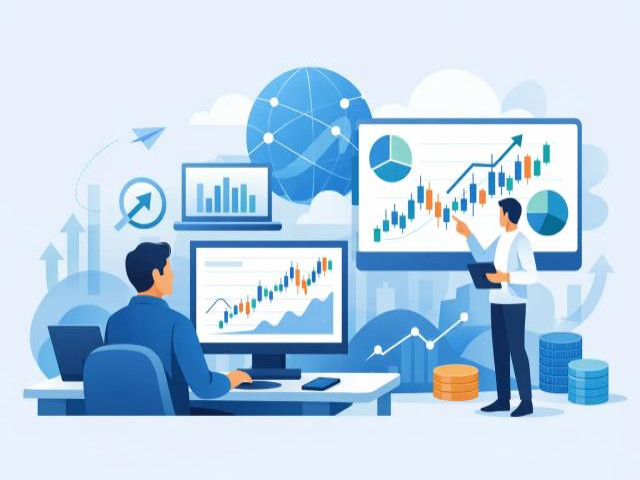
Learn how online asset managers trade across stocks, forex, crypto, indices, and commodities to pursue passive income with expert oversight.
Most investors never lose interest in the markets - they lose time, confidence, or patience. That is exactly why interest in how online asset managers trade keeps growing. People want access to market opportunities, but they do not want to spend every day reading charts, tracking news, or reacting to sudden price moves across multiple asset classes.
Online asset management solves that gap by turning active market participation into a managed service. Instead of placing every trade yourself, you allocate capital to a platform or team that monitors markets, analyzes opportunities, and executes positions on your behalf. The appeal is simple: professional trading activity, broader market access, and the possibility of passive income without taking on the full burden of being your own trader.
How online asset managers trade in practice
At the center of the model is delegated execution. Investors fund an account or program, and the asset manager uses that pooled or assigned capital to enter and exit trades based on a defined strategy. The work happens behind the scenes, but the process is usually far more structured than many beginners assume.
A serious online asset manager does not just open random positions and hope for the best. Trading typically starts with market surveillance. Teams or systems watch equities, fiat currencies, cryptocurrencies, indices, and commodities throughout the day, and in many cases around the clock. Different markets behave differently, so the trading approach in crypto may not match the approach in large-cap stocks or major forex pairs.
From there, analysis guides execution. Fundamental analysis looks at the bigger forces moving price - economic releases, company performance, sector trends, interest rates, geopolitical events, and shifts in investor sentiment. Technical analysis focuses on price structure, momentum, support and resistance, volume, and entry timing. In real trading environments, asset managers often use both. One helps answer what may be worth trading, and the other helps answer when to trade it.
The strategy behind managed online trading
When people ask how online asset managers trade, they often picture fast clicking and constant speculation. In reality, the better question is how they build repeatable decision-making. Consistency matters more than action for action's sake.
Most online managers trade within a framework. That framework usually includes asset selection, risk limits, position sizing, trade duration, and profit targets. Some strategies are short-term and aim to capture smaller market movements with higher frequency. Others are mid-term or long-term and rely on broader market trends. Neither approach is automatically better. It depends on market conditions, the manager's edge, and the investor's goals.
For example, a short-term strategy may perform well in active markets with clear momentum, but it can struggle when price action turns choppy and directionless. A longer-term approach may better absorb intraday noise, yet it may also require more patience during temporary pullbacks. This is one reason many online asset managers offer multiple investment timelines instead of forcing every client into one style.
Risk management is where real trading discipline shows
The public usually notices profits first. Professionals notice risk controls first. That is because trading results are not only shaped by what a manager buys or sells, but by how losses are contained when markets move the wrong way.
Online asset managers typically control risk through position sizing, diversification, stop-loss planning, and exposure limits. If one trade idea fails, it should not threaten the entire portfolio. If one market becomes unusually unstable, exposure may be reduced or shifted elsewhere. The goal is not to avoid all losses - no legitimate trading operation can promise that - but to prevent single events from doing outsized damage.
This matters even more in online environments where clients expect accessibility and speed. Fast deposits, digital dashboards, and real-time portfolio visibility are useful, but they do not replace disciplined execution. A platform can look modern and still trade carelessly. What separates a stronger operation is the combination of convenience and control.
Why online asset managers trade multiple markets
One major advantage of the online model is reach. Traditional investors often stay in one lane, such as stocks or mutual funds. Online asset managers can operate across several global markets at once, which creates more ways to respond to changing conditions.
If equity markets slow down, there may be movement in currencies. If forex becomes quiet, commodities or crypto may offer stronger setups. Indices can provide broader directional exposure when single-stock selection looks less attractive. This flexibility is a core part of the value proposition for investors who want diversified opportunity without managing five different brokerage accounts or mastering five different markets themselves.
Of course, broad access creates its own trade-off. More markets mean more complexity. A team that claims to trade everything still needs the operational discipline to understand what drives each asset class. Stocks react to earnings and sector rotation. Forex responds to monetary policy and macro data. Crypto often trades with a different rhythm, including weekend volatility. Good online managers respect those differences instead of treating all price charts the same way.
Technology makes execution possible, not automatic success
Technology is one reason online asset management has become more accessible to everyday investors. Digital platforms allow users to fund accounts, review balances, monitor trading activity, and request withdrawals without the friction that used to define managed investing.
But technology alone is not the strategy. A clean interface, automated funding options, and a mobile-friendly dashboard create convenience, not market edge. The actual trading advantage comes from how the manager combines technology with analyst oversight, data monitoring, execution speed, and risk controls.
That is why many investors are drawn to platforms that present both simplicity and visible operational activity. They want a straightforward user experience, but they also want reassurance that professionals are actively monitoring global opportunities. For newer investors especially, this combination can make managed investing feel both accessible and credible.
What investors are really paying for
In many online asset management models, clients are not paying for hourly advice or a traditional planning relationship. They are paying for execution, expertise, and the ability to participate in markets without handling the trading themselves.
A performance-based model, where the manager earns a share of profit, creates a different psychology than a flat advisory fee. It aligns the manager more directly with trading outcomes, which many investors find appealing. At the same time, investors should understand what that structure means. Returns matter, but so do the rules around profit calculation, withdrawal access, and the time horizon of the investment program.
This is especially relevant for people seeking passive income. Passive does not mean instant, fixed, or risk-free. It means the investor is not doing the day-to-day work. The market exposure still carries variability, and the best results usually come when expectations match the strategy timeline.
How trust is built in an online trading relationship
Because the relationship is digital, trust has to be earned through clarity. Investors want to know how funds are handled, what markets are traded, how performance is tracked, and how they can monitor their account.
Transparency tools matter here. Portfolio visibility, transaction records, investment program options, and clear funding and withdrawal processes all reduce friction. They also help investors feel connected to a service that operates online rather than across a desk from them.
For a platform like Budrigantrade, that trust equation is central. The promise is not just access to markets. It is access to managed market participation in a format that feels direct, understandable, and built for modern investors who want results without becoming full-time traders.
Is this model right for every investor?
Not always. Investors who enjoy researching trades, building their own systems, and controlling every entry and exit may prefer self-directed accounts. They may not want to hand decision-making to a manager, even if that manager brings experience and structure.
But for working professionals, beginners, side-income seekers, and business owners, online asset management can be a practical fit. It reduces the learning curve, saves time, and opens exposure to global markets through a managed process. That convenience is not a small detail. For many people, it is the only reason they can participate consistently at all.
The real value of understanding how online asset managers trade is not just technical knowledge. It is knowing what happens behind the promise of passive income. Markets still require analysis, timing, discipline, and emotional control. Online asset managers aim to carry that burden for the investor while keeping access simple and transparent.
If your goal is to put capital to work without turning trading into a second job, the right managed platform can offer a more direct path to financial well-being. The smart next step is to choose a service that treats opportunity seriously, explains its process clearly, and makes you feel informed while your money stays active.
Recent Posts
-

When Should Portfolios Rebalance for Growth?
08 Oct 2026
-
Platform Security Review for Confident Investors
08 Oct 2026
-

How to Invest Business Cash Reserves Wisely
08 Oct 2026
-

How to Calculate Compound Returns on Investments
08 Oct 2026
-

Alternative Assets Trends Reshaping Portfolios
08 Oct 2026
-
How to Read Portfolio Drawdowns With Confidence
06 Oct 2026
-
-

Are Investment Platforms Regulated in the US?
06 Oct 2026
-

How to Diversify Income Streams With Purpose
06 Oct 2026
-
Crypto Custody Service Review for Investors
06 Oct 2026
-

A Small Business Cash Reserve Example That Works
23 Sep 2026
-

Retirement Planning That Builds Real Flexibility
23 Sep 2026
-

Stocks Versus Bonds Allocation for Your Goals
23 Sep 2026
-

15 Best Investor Due Diligence Questions
23 Sep 2026
-

15 Best Investor Due Diligence Questions
23 Sep 2026